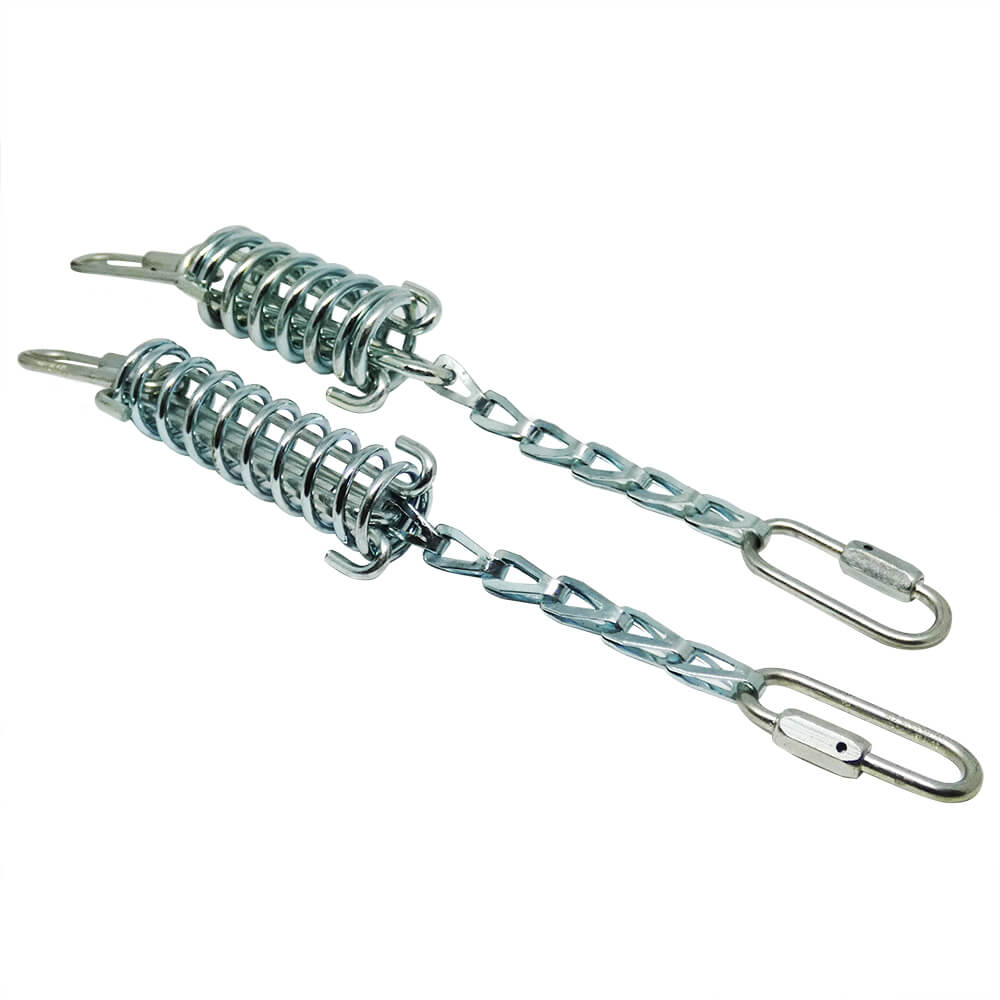
Compression type tailwheel springs

Probably. I took the time to get field approvals for two types of master cylinders. One could view them as part of a control system?

I don't know anything about the T3 - my impression is that it is STC'd for Cubs? Should have been an easy field approval.

Correct

It’s a nothing burger to get the 337 for the t3, I even have a copy of a approved 337 for a decathlon, so it’s far from uncharted waters to get it done on champs and the like…well it’s a nothing burger when the government decides to get back to work
 
I'm going ask my IA about this as well. I picked up a tailwheel assembly on the cheap from facebook so once it's all cleaned and back together I'll do the steering springs, tailwheel springs, and a fresh tailwheel assembly. Maybe then it won't shimmy! lol
 
Last edited:
Impressive price. The shimmy has nothing to do with the springs - it is kingpin angle and damping.
 
Kingpin angle, tire air pressure, spring tension, amount of grease, etc......the tailwheel by itself is designed to track straight without any steering inputs so having undamped springs pulling on it when it's already straight doesn't make any sense to me. I like the Maule springs because they aren't doing anything if the tailwheel is straight, it's free to track straight as it's designed to do. So I wouldn't say it has nothing to do with the springs.

From another angle, I also suspect we induce shimmy with too much back stick too early in the landing rollout when the elevators are still very effective. We're probably pushing down hard enough to change the kingpin geometry and inducing shimmy. I've seen where it goes away if I move the stick forward. It's hard to say don't bring the stick back after landing because sometimes you need it to stabilize the plane on the wheels but, combined with a high landing speed, it's contributing to shimmy, IMHO.

Just thinking some more, has anyone ever compared their two springs to see if they are exactly the same length and if they have exactly the same spring constant? When the tailwheel is straight, the distance from the control horns on the rudder to the steering arms on the tailwheel should be the same. If the springs aren't matched, then one side will be pulling harder than the other which could induce shimmy. I'd be curious to test a set of springs from a plane that has had a history of bad shimmy issues to see if the springs are way off or not part of the problem.

fyi, spring constant is the force needed per inch of stretch. If you have two of the same springs, hanging a certain weight on each of them should cause them to stretch the same amount.
 
I have had success without compression springs. I average 7 tailwheel landings per day.
I bet you could find springs like that elsewhere - McMaster-Carr?
The connector is available at sporting goods stores. They are way better than the toilet clips.
 
IMG-9955.jpg
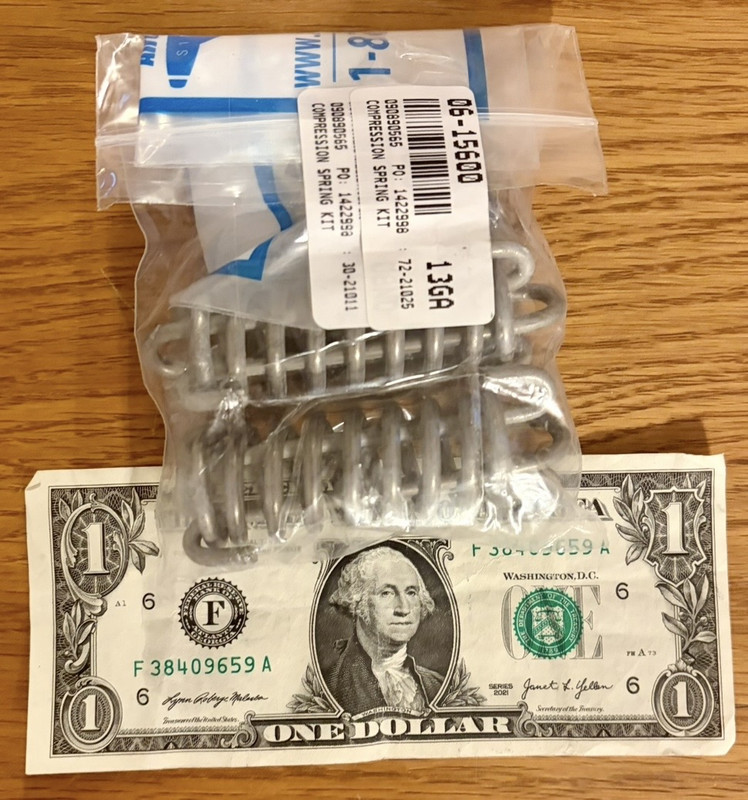
Forgot, I was going to post a picture of how beefy those springs off spruce are
 
“the tailwheel by itself is designed to track straight without any steering inputs”

Son was flying my Citabria back from a long cross-country and lost a spring, took the remaining one off and just used the occasional differential braking to get home. Got two new ones from ACA, keep the remaining one in my “worst case scenario bag” in the plane.

Another time I broke the loop off the end of the spring landing at my brother’s cabin in the bush. Threw it in his barbecue til it got good and hot, then bent another eye with some needle nose pliers and put it back on. Worked fine.

Too much back pressure rolling out would induce shimmy. Tried everything, re-arched the tailwheel springs, finally bought some new 1.5” springs from ACA. Problem gone. Flying off-airport you quickly learn to get the tailwheel off first and set it down last.
 
“the tailwheel by itself is designed to track straight without any steering inputs”

Son was flying my Citabria back from a long cross-country and lost a spring, took the remaining one off and just used the occasional differential braking to get home. Got two new ones from ACA, keep the remaining one in my “worst case scenario bag” in the plane.

Another time I broke the loop off the end of the spring landing at my brother’s cabin in the bush. Threw it in his barbecue til it got good and hot, then bent another eye with some needle nose pliers and put it back on. Worked fine.

Too much back pressure rolling out would induce shimmy. Tried everything, re-arched the tailwheel springs, finally bought some new 1.5” springs from ACA. Problem gone. Flying off-airport you quickly learn to get the tailwheel off first and set it down last.

Taking it easy on the tailwheel is standard regardless of where one’s landing, normally I’ll keep the tailwheel up till taxi, and even then depending on who’s around taxi on the mains is kinda fun too

In many ways being hard on the tailwheel is more pronounced on smooth hard surfaces in my experience
 
I spend a lot of time doing 3 point landings on pavement. Yesterday was a slow day - only six landings. Saturday was 22.
I am simply not having tailwheel problems.
Sure - once in s while we get shimmy. We tighten up the damper and check the alignment. We do not run compression springs, except on one J3.
 
Next time someone asks about tailwheel shimmy, I'm going to ask how long the runway is at their home airport. If it's very long, I'm goiong to suggest they go see if it shimmys on an 1800 ft runway where they're more likely to land at a lower speed. I must have been ripping when I landed at Gainesboro, GA on my way home because it raised all kinds of hell with the shimmy that occurred. I've been trying to get my approach speed to 70 and less as I start the flair which has kept the shimmy at bay for now.
 
Are you talking about Decathlons? Seventy is about max approach speed prior to flare. I do use 90 on an ILS approach, but slow to around 60 before "flare". In quotes because you don't really flare a Decathlon - just get it in 3 point attitude and land.
 
Yes, the Standard Decathlon I've been trying to make friends with. The POH says 65 to 70 for a normal approach so I've been flying the pattern at 70 and trying to transition to 65 approaching the "flare".
 
Back
Top