First Solo , First Ground Loop

Do full stall landings in that bird. I don't teach wheel landings until full stalls are completely mastered.
 
I think the key here is that you were "keeping the tail off as long as possible". When the tail falls on its own, that means that your elevator is no longer effective(won't hold the tail up any longer).
If the elevator is no longer effective, then neither is the rudder. You got to the point that your rudder would no longer steer the airplane.
You should start the tail down as soon as speed will allow. Get the tailwheel on as soon as possible to help steer the airplane.
Here is a paper I hand out to my students, hope it helps.

https://www.advancedtailwheeltraining.com/tailwheel_basics
Just a thought but the point at which an elevator becomes ineffective is not the same as when the rudder becomes ineffective. There is a moment in which the rudder becomes ineffective transitioning from tail high to the ground which has to do with the air flow around the rudder being disturbed as the tail drops until the wheel is steering. But the speed of the tail dropping is greatly changed having someone in the back vs solo. You could push the plane side to side yawing it on the ground with two fingers, but you can’t lift it with two fingers! Then put a person in the back, can still move it with two fingers but definitely can’t lift it.
 
Thank You Gentlemen for your replies. I wanted to do nothing but full stops Tuesday but the pattern was crowded. So the same drill . I will have a lot of questions Saturday and hopefully we can get some full stalls in.
We did roll down to as slow as possible to still have room to take off. But I think I need to actually exit the runway and do a full taxi back.
I am told I'm pushing the plane onto the runway instead of letting it stall in the wheel landings. I know why, I feel more in control in a wheel landing , but the three point seems ok too. But I'm not slowing down enough to get the feel of that short period between the transition from the roll out to taxi.
 
I think the key here is that you were "keeping the tail off as long as possible". When the tail falls on its own, that means that your elevator is no longer effective(won't hold the tail up any longer).
If the elevator is no longer effective, then neither is the rudder. You got to the point that your rudder would no longer steer the airplane.
You should start the tail down as soon as speed will allow. Get the tailwheel on as soon as possible to help steer the airplane.
Here is a paper I hand out to my students, hope it helps.

https://www.advancedtailwheeltraining.com/tailwheel_basics
So many rules! Oh wait...
 
Saturday work on getting the tail wheel on the ground first - before the mains.

I have to watch my students - they start getting grease job wheel landings and forget the full stall. Wheel landings can be smoother - but a good solid "plunk" on 3 wheels is ok, and actually preferable to a steady diet of wheel landings.

I have an exercise you may not have seen before - I get the stick and power; the student gets the rudder pedals, and I try to get them off the centerline for about 2000'. Great fun!
 
I think the key here is that you were "keeping the tail off as long as possible". When the tail falls on its own, that means that your elevator is no longer effective(won't hold the tail up any longer).
If the elevator is no longer effective, then neither is the rudder. You got to the point that your rudder would no longer steer the airplane.
You should start the tail down as soon as speed will allow. Get the tailwheel on as soon as possible to help steer the airplane.
Here is a paper I hand out to my students, hope it helps.

https://www.advancedtailwheeltraining.com/tailwheel_basics
Good point about the elevators giving away what is happening to the rudder. I did wheel landings a long time ago when I first got my tailwheel signoff and not much since then so I'll have to admit at taking a look at your handout also!
 
Saturday work on getting the tail wheel on the ground first - before the mains.

I have to watch my students - they start getting grease job wheel landings and forget the full stall. Wheel landings can be smoother - but a good solid "plunk" on 3 wheels is ok, and actually preferable to a steady diet of wheel landings.

I have an exercise you may not have seen before - I get the stick and power; the student gets the rudder pedals, and I try to get them off the centerline for about 2000'. Great fun!

on the mains or in flight??? :eek:
 
Just a thought but the point at which an elevator becomes ineffective is not the same as when the rudder becomes ineffective. There is a moment in which the rudder becomes ineffective transitioning from tail high to the ground which has to do with the air flow around the rudder being disturbed as the tail drops until the wheel is steering. But the speed of the tail dropping is greatly changed having someone in the back vs solo. You could push the plane side to side yawing it on the ground with two fingers, but you can’t lift it with two fingers! Then put a person in the back, can still move it with two fingers but definitely can’t lift it.

probably why there is so much more elevator area than rudder usually, no?
 
probably why there is so much more elevator area than rudder usually, no?
Even with that statement, even with so much more area, the tail will still drop faster when someone is in the backseat. Does airspeed required to use the rudder change?

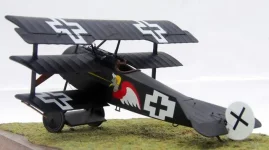
A good image to use is one of the Fokker Triplane. They usually land them in a wheel landing so they have the best rudder. But the transition from tail up to the tailskid is the scariest part of the flight because you have NO rudder use at all until the tail is down. That is because the horizontal stabilizer is so large that it blocks all airflow from hitting the rudder. Now, Citabrias have a taller rudder so you will always have SOME airflow but the most area is down low which does not have a smooth airflow in the tail high to ground transition because of the horizontal and elevator.

In a T-6, I’ve noticed that the rudder starts to go away BEFORE the elevator. The tail will stay up with neutral stick and you’ll start needing more rudder on your corrections.

In a Fleet 16b, the rudder is probably pretty close to the same area as both elevators. I only full stall it so I can exactly tell how it is on landing, but I have never ran out of the rudder during any phase.

My point is, you can’t relate loosing your elevator as the same speed you will loose your rudder! It’s that the tail starts dropping, you fall behind the aircraft cause the “flights over”, and the rudder doesn’t have smooth airflow over it
 

Attachments

  • 72AAFA19-C13E-48D2-B902-01F057FF22A5.webp
    72AAFA19-C13E-48D2-B902-01F057FF22A5.webp
    27 KB · Views: 2
I never considered that. What I have observed is folks do not put enough rudder in when the nose moves, at least at first, and do not have the ailerons fully into the wind when the tail comes down. I have no experience with exotica like WWI replicas, but quite a bit of experience with Champs. September has been light - I will have only logged around 340 landings by this evening, all taildragger.
 
Very Nice to meet you and fly with you yesterday Bob. I love your Cub and was amazed at how slow it can fly at
Hopefully I will fly Monday and apply your wisdom
Again Thank You
 
I take it back. I remember one Maule 235 with big flaps and narrow gear. Normal landing - a wheel landing. Got the tailwheel on the ground, but it started shimmying.

Being a Cub pilot, I merely raised the tail, and the darn thing went unstable. I had zero control. It did a very gentle 270 degree ground loop, and stopped all by itself.

All of the other taildraggers I have flown, I have rudder control during and after the tail descends, in a wheel landing. I have noticed that this is the place where students get in the most trouble.

I did try it today in the J-3 and Decathlon. Not a hint of loss of rudder control.
 
And yes. Fun flight! I meant to have you do a couple slips, but time got away from us. I will be in the Stearman tomorrow, but will look for you.
 
Don't sweat it so much, I've done at least a couple of graceful 270's in my life as well. From my experience most benign "ground loops" happen after you think you're all done with the landing and have dropped your guard and the really bad ones probably started way back before you even crossed the numbers. Best medicine is to get right back in the saddle as soon as possible and put it behind you.
 
Got back on the Horse and Soloed Friday. All went well. Now I need a lot of practice, and I need to get shorter . Need to switch over the 28Left soon and start using the smaller runways.
Thanks Again for your Help Bob Turner. Now I'm trying to find a Cub I can rent. I really like sitting down in such a short space.
Hoping to fly at least twice a week to build the skills
 
Stay off 28 left until you have 50 solo pattern hours.

I am embarrassed to say I did not caution a student that way. He had 42 hours in Cubs, not all in the pattern, but maybe ten solo pattern. Got one tire in the dirt on the left, hit one of those huge signs that are now everywhere, and flipped upside down.

Unhurt, but he quit flying. That was two years ago, and I still regret not insisting . . .
 
Stay off 28 left until you have 50 solo pattern hours.

I am embarrassed to say I did not caution a student that way. He had 42 hours in Cubs, not all in the pattern, but maybe ten solo pattern. Got one tire in the dirt on the left, hit one of those huge signs that are now everywhere, and flipped upside down.

Unhurt, but he quit flying. That was two years ago, and I still regret not insisting . . .
For us east coast guys, what’s wrong with runway 28 at your airport?
 
I will follow that advice It’s going o be a while before I venture out as far as Gilespie too

28 left is shorter and narrow.
 
Back
Top