Need Pitot Tube Mount Pix

That makes more sense. Why not choose instruments and nav equipment that is already approved/STC'd? Then you just fill in the page on pitot-static approval.
If your ACO wants you to get an STC for the radio installation, they are telling you to go away. Getting an STC for that stuff is rarely done, because it is expensive - even for the radio manufacturer. I think the G5 had to go through the process, but you still need a gyro to meet the regs.
Since you can actually buy a Decathlon with a gyro panel from the factory, that ought to be more than enough.
 
Item 31A - Artificial Horizon Gyro dwg 7-1422 (Bellanca, 1979).
32A - Directional Gyro dwg 7-1422
turn & bank and clock - same drawing.
Your approved choices in 1979 for radios are now obsolete (King, Narco, Escort 110, Edo-Aire). Get an equipment list for a new ACA Decathlon and use that. ACA has approval for anything it sticks in an aircraft when it leaves the factory.
 
That makes more sense. Why not choose instruments and nav equipment that is already approved/STC'd? Then you just fill in the page on pitot-static approval.
If your ACO wants you to get an STC for the radio installation, they are telling you to go away. Getting an STC for that stuff is rarely done, because it is expensive - even for the radio manufacturer. I think the G5 had to go through the process, but you still need a gyro to meet the regs.
Since you can actually buy a Decathlon with a gyro panel from the factory, that ought to be more than enough.

The GI-275 and GTN 650Xi both have AML STCs that approve installation in ACA 8KCAB. My airplane was made in 2004, so it has older stuff (although it lists a heated pitot tube option, Garmin 430, AI, and a few others).
 
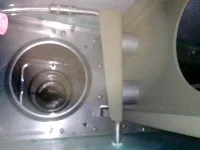
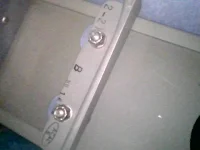
Heading to the hangar with my wireless borescope to literally see what I can see of the attachment of the mounting bracket of the unheated pitot tube through the closest inspection port.

Question: there is an inspection ring installed immediately adjacent to the pitot tube. As the owner (who is authorized to make minor fabric repairs) am I authorized to cut out an inspection port from an already installed ring? If I am...is it a good idea or should I pay the guy who recovered the wing to do it for me?
 
I would consult your mechanic. But if the ring is already installed, I would not have a problem with one of my customers cutting it open.

I would recommend a new exacto knife blade. Work slowly. And caution to not cut into anything else that may lay inside that hole. And do not knick the spar.
 
An update: I wrote a detailed description of the installation of a heated pitot tube in an 8KCAB, informed by photos I took through an inspection port with a bore scope:
Unheated Pitot Tube Mounting Bracket.webp IMG_0085.webp IMG_0097.webp IMG_0094.webp IMG_0096.webp

The good news is that the mounting bracket for the heated pitot tube uses the same holes in the rear spar as the unheated pitot tube mounting bracket; the spacing bushings, bolts, and washers may also be reused after removal of the unheated tube assembly. Only the lock nuts must be new. The other difference is that the heated tube mounting bracket is installed on the aft side of the rear spar to insure alignment of the heated with the unheated tube.
The ACA repair station lead, who has installed many heated pitot tubes in Scouts and other ACA airplanes, reviewed my description and told me on the phone this morning that's it's an accurate description of how they install heated pitot tubes. If I can get a statement from ACA to that effect, the FAA will be satisfied that I have adequate technical data describing the installation. My description will be attached to the 337 for the Major Alteration that the FAA tells me I must submit for a heated pitot tube installation. The description (and a few others attached to the 337 to satisfy Part 23 IFR requirements) becomes Approved Data when the FAA blesses the 337.
 
I would consult your mechanic. But if the ring is already installed, I would not have a problem with one of my customers cutting it open.

I would recommend a new exacto knife blade. Work slowly. And caution to not cut into anything else that may lay inside that hole. And do not knick the spar.
Thanks; because I could photograph what I needed to see I decided that the A&Ps and fabric guy can perform the surgery.
 
Are they guaranteeing that you get IFR status once the heated pitot is approved? Or do you get to start over with a new 337 submission?
 
Are they guaranteeing that you get IFR status once the heated pitot is approved? Or do you get to start over with a new 337 submission?
My field approval application comprises an intro/overview letter and 15 enclosures. The ASI recommended I apply the format in which Ken Bowersox successfully submitted his STC for an IFR SuperD. Some of the enclosures are reference documents that the ASI believes the Cert Office will want to have in hand. These include the 8KCAB AFM for my airplane and 8GCBC Scout manuals because my field approval application is on the basis of similarity to the IFR Scout.

The heart of the application is a draft 337. Half the the 337 entries are for the Garmin avionics that each have an AML STC and other FAA-approved supporting documents, e.g., Installation Manuals and Instructions for Continued Airworthiness. However the Major Alterations such as the heated pitot tube and the alternate static air source selector valve have no or insufficient acceptable or approved ACA data. The ASI expects the enclosures I've written to describe procedures used for the alterations so that a future owner not named Bruce can maintain the airplane. My understanding is that having made the changes and tweaked the 337 and enclosures to reflect what and how the installation was performed, the supporting and attached to the 337 enclosures become FAA approved data. There are a few other required enclosures such as a Statement of Compliance that describes the methods or evidentiary records demonstrating compliance with the regulations affected by the changes, an electrical load analysis, post-alteration flight check results, a complete equipment list, and a description of the airplane before alteration.

The two most significant changes, the heated pitot tube and alt static air valve, do not have adequate ACA tech data. I'm expecting the ASI will decide that I've created FAA acceptable and approved data . If so, he puts the application into (his words) a "drop box" from which another tier in FAA management assigns the application to a branch Certification Office. I don't get to talk to the Cert Office (aka: ACO) until they contact me directly. There's a 90% chance according to the ASI that evaluation and an approval decision will be made by the ACO in the same building as the FSDO, but it's not certain and won't be known until the application has been selected from the drop box.

I'm making a leap of faith that my application will be approved: it's a question of when, not if. I have an 8 Sep reservation at the avionics repair shop/Garmin dealer who will do the work. Although the FAA is crystal clear that starting work before approval is a risk, it's a risk I'm willing to assume. Worst case completion date for the installation is 15 Oct. The airplane will be equipped for flight on an IFR clearance, but in VFR weather. We're based at an airport north of Seattle; we will have fewer and fewer VFR days starting in mid-Oct. If I wait until the ACO gives me a green light to start the installations, I won't have very many opportunities for the flight checks until next March.
 
A progress update:
While I'd hoped that the installations for the IFR upgrade would be completed by now, initiating the transition to the Certification Office review of the final "as built" documentation, it's looking like an early November completion is more likely.
The original instrument panel was revealed to be cracked and deformed. This is unusual but required replacement. I decided not to use the same ACA part but to replace it with a thicker (0.090" compared to 0.050") panel. The company making the new panel used the ACA panel as a template, modifying it to accommodate the radio stack (Bendix/King GMA 30 audio panel, Garmin GTN 650Xi, Garmin GTX 345 ADS-B In/Out transponder), pitot heat switch, alternate static air source valve, circuit breakers on the panel. There's also a connector that will interface with a fabricated cable my Yaesu FTA750 hand-held radio so that I can use the stick-mounted PTT switch, headset, and comm antenna in the (very unlikely) event the GTN 650 comm radio fails. The new panel hasn't shipped, which has delayed completion.
Everything else is installed or ready for installation when the new panel arrives. That includes the heated pitot tube. When everything required to support a 15 min ferry flight to the fabric shop for the finishing touches required by the penetration of the pitot tube through the fabric, the airplane will be ready for flight testing beyond the minimum "return to service" flight checks.
I'm concerned that by the time the airplane is ready for the more extensive tests needed for ACO evaluation of the field approval application PNW icing conditions will not ground it.
Ideally, the Certification Office and FSDO will be back at work before then!
A question: it seems to me that while it's not really required for my safety pilot (flying in simulated IFR under VFR) to be able to see the flight instruments and traffic, it would be a good idea (if practical). I have an iPad Mini and an iPad Air that I can interface with a camera mounted to show the panel flight instruments; I'd probably use the Air for that, with the Mini connected to the ADS-B In for traffic.
Does anyone use an Insta360 with a tablet computer like an iPad for the back seat occupant? If so, can you offer mounting suggestions?

BTW, someone on this site or maybe on the corresponding Facebook group horrified me with a mention that one of his field approval applications required 8 months. The first post I made on Facebook that I was starting this process is dated 1 March, although the application wasn't submitted by the FSDO (on my behalf) until 18 Aug. I won't be surprised (merely disappointed, but resigned) if the application isn't approved until the end of this year.

Thanks!
 
I hold 17 field approvals. My average is eight months. If I did not politely call or e-mail once a month, my average time would be infinity.
Oh - and one AMOC. Proud of that one - three months.
 
Once in a while I get one instantly. Most of them take a year. Their philosophy is to not answer attempted contacts and hope they go away.

Their guidance says to answer field approval requests in a timely fashion. They really do not want to do that.

Be nice, because they really do have the power to turn you down with specious reasons. There are avenues for appeal, but what if you piss your local inspector off? Expect weekly visits looking for uncalibrated torque wrenches and stuff?

Mine are mostly nice to me, and I try to be civil and patient. I have a 100% success rate if you don't count the two they forced me to file and then rejected after six months. Those were for minor alterations, but I forget what the rejection rationale was. I filed them with a protest letter stating that they were minor.

Remember, these guys are just like us, except they have more power. They may or may not be good mechanics. They are not lawyers.
 
Once in a while I get one instantly. Most of them take a year. Their philosophy is to not answer attempted contacts and hope they go away.

Their guidance says to answer field approval requests in a timely fashion. They really do not want to do that.

Be nice, because they really do have the power to turn you down with specious reasons. There are avenues for appeal, but what if you piss your local inspector off? Expect weekly visits looking for uncalibrated torque wrenches and stuff?

Mine are mostly nice to me, and I try to be civil and patient. I have a 100% success rate if you don't count the two they forced me to file and then rejected after six months. Those were for minor alterations, but I forget what the rejection rationale was. I filed them with a protest letter stating that they were minor.

Remember, these guys are just like us, except they have more power. They may or may not be good mechanics. They are not lawyers.

I've been (sincerely: no snark or sarcasm) dazzled by the responsiveness of the FSDO airworthiness who's been assisting through the process. He usually replies to my e-mails the working day after he receives them. He also told me that the Certification Office project engineer (and now the Flight Test group and Aircraft Evaluation group, both of whom he reports as "interested" in the field approval) will not contact me directly: they will contact him and I shouldn't (can't, really) try to reach out to them.
 
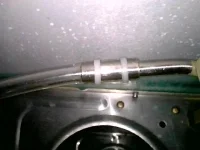
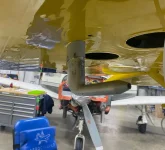
so how is the heated pitot tube mounted to the wing???
Installed Heated Pitot Tube.webp
The mounting bracket to which the AN5812 12v pitot tube is attached is bolted to the rear spar. The same bolts that attached the mounting bracket for the unheated pitot tube are used to attach the (very different) mounting bracket for the heated pitot tube. The heated pitot tube bracket is attached to the flat rear face of the rear spar; the unheated pitot tube was attached to the front face using spacers to compensate for the spar flanges (it's a "C" shaped beam). The shop did a good job (IMHO) minimizing the area of the penetration of the mounting bracket though the wing fabric. The fabric shop will reinforce and waterproof with a patch (kind of like a fabric "flashing") the wing fabric through which the mounting bracket passes. That patch will protect from loads and vibration.

As soon as the new panel arrives it will take about a week to finish installation of avionics and instruments in the new panel. I'll make a short ferry flight to the fabric shop (weather permitting). If weather looks bad the fabric artificer might take pity and drive over to do the fabric work in the repair station hangar. Early November weather may make a ferry flight impractical, ironically, for an airplane that's now IFR equipped but yet to be approved for IFR conditions.
 
Unfortunately you will probably be waiting until the government reopens before the ACO can look at your proposed STC
 
Unfortunately you will probably be waiting until the government reopens before the ACO can look at your proposed STC
I'm sure you're correct and they will also be backlogged with tasks to which they will assign a higher priority than my field approval application (not an STC).
 
Back
Top