Citabria High Oil Temps

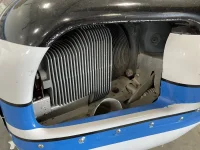
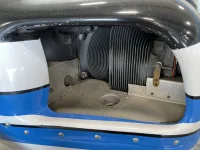
That other citabria came back in so went to take a peek. Looks like your baffles are the norm if not a little better by the alternator than on this one. No cht or egt in the panel though so oil temps must be good. They do follow down around the bottom of the cylinders a bit. I might have to suggest sealing up his baffles a little after all this. However I also know this gentleman pulls power back before he even clears the end of the runway. D3D61AAD-1396-4DA9-98B2-18F4250AC173.webpCFB8292B-73DE-4497-B03D-1C96727534D0.webp
 
Best I can tell, they don’t use any such thing. I do see it very common in many other airframes. If I have to do it, I will, but I’m hoping that a good cleanup and tightening of the factory baffles will get me there.

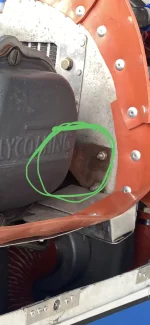
there’s are several gaps like this alternator bracket that could stand to be sealed to more than they are now. I’m not sure if this is how all aircraft are or if this is some kind of hack job from years ago. Regardless, there is plenty of room for improvement.

View attachment 5458
If your lycoming doesn't have inter-cylinder baffles it would be the first one I've seen.
And I've seen a few...
 
If your lycoming doesn't have inter-cylinder baffles it would be the first one I've seen.
And I've seen a few...
It has inter-cylinder baffles. I was referring to the aluminum plates that block the lower half of cylinders 1&2. Best I can tell, that is not a factory setup for a citabria, but many other airframes do utilize them.
 
I am pleased to report that tightening up the baffling seems to have had the desired outcome. I did a test flight yesterday on a nearly 90° day and observed the following:

CHT was 400-420 during the climb. Once in cruise, I purposely did a high power cruise at 2500 RPM and the CHT settled to about 360-375. Oil temperature rose to about 180-190 and stayed there the whole flight.

I do still suspect that changing the exhaust to the single muffler/side exit will further help, but it seems like for now, everything is finally acceptable, especially given the high ambient temperature.
 
Any progress on this? I’ve just begun chasing a high oil temp problem on my 77’ 8KCAB. I first noticed it end of last summer after overhaul. New pacific oil cooler and all new hoses. Also running the Casper labs adapter with no spacer. Though it might be a bad new vernatherm so put the old one back in. Hasn’t seemed to help, yesterday got up to 245 or so right at the red line. Doesn’t do it when doing Acro, pattern work, or cruising. Normally it’s been running about 190-200 for all that. Only seems to creep way up when doing a series of climbs and descents (as in buzzing a few grass strips by us), or trying to slow flt while we take turns in the box. So the times you’d expect higher oil temp.
Yesterday it started creeping up to about 220, came back down in the descent, but then came way back up and kept rising all the way to 245 after leveling straight and level at about 75% power. Almost like once the oil got a little hot and the oil thinned too much it exhastberated the problem of possibly the vernatherm not seating all the way. New baffeling and it all fits like it should. Just starting to really chase this down, as I hoped the vernatherm swap as winter started was the culprit.
I read the service bulletins about lapping the vernatherm seat but haven’t pulled the adapter back off yet to look at it.
 
Mine does run like that in the summer. Make sure your baffles go up and forward? And note that the green arc goes to 245 - your engine will not cook itself at 246.
 
True. But it’s still not good to run that hot. At that temp the oil pressure start dropping. The baffles are all forward and tight. Gonna flush the oil cooler and hoses just to make sure. Unfortunately I only put 40 hrs on the old engine after buying if before I had to overhaul it, so not too much time to compare it to the old engine. But really the only difference is adding the Casper filter adapter.
 
We had a Continental engineer give a presentation at an IA seminar. It has been many years, but what I got was the limit was maybe a tad bit arbitrary. Remember, Continental is 225, Lycoming is 245. His thesis is tha it is an FAA approved limit, but you are not damaging your engine by going slightly over.

As to lower pressure - the Continentals seem to work fine at 30 psi, while the bottom of the green for Lycoming is 60. Not sure I see any fundamental difference in engine design. Hotter oil does drop the pressure, but that is because the flow is higher.

Just some thoughts - not recommending operating over red line, just thinking you can safely operate at 244.
 
Just speculating but I believe the difference in pressure is due to the location of pressure sensing. Lycoming has the pickup for pressure on the accessory case, before it enters the galley. Conti, at least the ones I remember, have theirs between the #4 and #6 cylinders, already in the galley.
 
Mine is right next to the pump, behind #1. There is some loss due to friction in the galley wall, but tough to believe we would lose half the total pressure in an inch worth of galley away from the pump. I am going to vote for pump design. It isn't The relief valve, because they are normally open at operating temps.
 
Well when the oil gets that hot it thins enough to create a drop in pressure.
Went to lunch today and it was running 190-200 on a 78 degree day. Normal so who knows🤷🏼‍♂️
 
Back
Top