Citabria High Oil Temps

Well shucks, that is a no brainer.
I'm not trying to sell it, but it really did make the airplane feel completely different. I forget the units it uses to measure...inches per second or something. Mine went from .9 to .05. I was told it was one of the worst he's seen.
 
Well it was nearly 100° yesterday and against my better judgement, I decided to go for a flight. Temps were nice and cool above 5000’ MSL so my plan was to climb up above that and leisurely cruise on out to my lunch destination. Unfortunately it seems my oil had other ideas and I got to 245° indicated going through about 4000’, forcing me to level off, magically accelerate and reduce power while going full rich mixture. I was able to get it to 230° or so and resume the climb. ASSUMING THE GAUGE IS ACCURATE, is this acceptable for an airplane equipped with an oil cooler on a HOT HOT summer day? I would expect warmer temperatures, but I don’t think redline is acceptable.

My plan so far:

I wasn’t super happy with the routing of one of the oil cooler lines. The line itself was a bit too long and was routed in a way that was causing a “pinch” point on some other accessories. I don’t know how susceptible Stratoflex hose is to being pinch or kinked, but I wasn’t happy with it. I had a new set of Aeroquip hoses made up and will mount those next time I am at the hangar. While I am there, I will check the calibration of the temperature gauge itself (I know, I should have started there). Engine baffling is new and appears to be sealing up very nicely, but might be worth verifying with a borescope through the front air inlets to get a closer look. Beyond that, I am at a loss. Larger oil cooler? Pull engine, remove accessory case and inspect ports? I don’t know how far to take it.

This is the best pic I could get of the baffles. They look great to me.
2D6DC4AA-1BD5-4797-8C6B-1834B750D597.webp
 
It is possible to kink it, but even not kinked to sharp of a bend will reduce interior diameter, minimum bend radius is usually 10x the diameter. You feeling resistance you’re bending to tight. Also I would leave it full rich in your climb. Only time I will climb leaned out is in an easy enroute altitude change. But yes definitely see if your temp guage is accurate.
 
It is possible to kink it, but even not kinked to sharp of a bend will reduce interior diameter, minimum bend radius is usually 10x the diameter. You feeling resistance you’re bending to tight. Also I would leave it full rich in your climb. Only time I will climb leaned out is in an easy enroute altitude change. But yes definitely see if your temp guage is accurate.
This is good to know. That gives me some confidence that the lines would be part of the problem indeed. We’ll see if the new ones make any difference.

There is a Stewart Warner cooler that is referenced in the part manual that Pacific Coolers says has significantly more cooling capacity. So I do have that as an option as well.
 
Installed/re-routed new oil lines today as well as checked the accuracy of the gauge. Unfortunately, the gauge is dead on, which was my assumption from the beginning. The new oil cooler lines seemed to help slightly. The conditions today were nearly 100 degrees so almost identical to last week. I climbed to 5500 without reaching redline, but it was within 10 degrees or so. Some nice acro on the way down cooled things right off.

We've ordered the Stewart Warner high efficiency cooler and will be installing that hopefully later this week. Beyond that, I'm at a loss.
 
How’s the bottom of the cowling set up? Look like any modifications have been done? Just thinking not that someone tried making it more aerodynamic but in the process completely screwed up the suction that is supposed be in the lower half of the cowl. Should be a lip on the opening or cowl should be below the firewall by an inch or two so the air flowing past creates a low pressure area. Cowl flaps just adjust how much suction you create.(as an example) Had a cardinal with that problem that nobody could figure out.
 
Good question, I’ll take a look later this week because I can’t honestly remember. Wouldn’t be hard to add a lip to it if needed.
 
Another day of trouble shooting down. What a day it was. I installed the Stewart-Warner high efficiency cooler. My IA suggested checking the mag timing as well since we had the cowl off. Both mags were timed at 20°. So he quickly got the right mag timed perfectly at 25° but the left was not so compliant. All the mag shops had a minimum 14 day turnaround as they didn’t have any Bendix mags with an impulse coupling in stock. For not much more money, we installed a Surefly electronic ignition on the left mag instead because there was one in stock locally. Engine run-up and leak check was great, but I ran out of time for a test flight. Will do that tomorrow. Not sure if timing being 5° late could cause any temperature issues, but that’s one more variable eliminated. I planned to install a Surefly at the annual this year anyway, so it’s not a big deal to spend a few extra dollars now and avoid the down time.
 
You’ll like the new mag, that being said I went back and see this sat for a wile before you bought it. Just a thought and you may have looked at the plugs, but any chance it’s burning lean? If the fuel sits to long I’ve seen it build up in carb jets and fuel injectors and cause a lean burning issue which could add to the oil temp increasing. This is epically true if any auto fuel was used in the past. Just an idea.
 
I'll definitely look into the injectors. It does gain RPM when I lean for max power, but it definitely doesn't hurt to check.

I did a test flight yesterday (another 96 degree day) and it did seem to perform better. I did a climb to 10,500 while leaned for max power and the highest it got was 230 then came down during cruise. I didn't stay in cruise long enough to see just how far it would come down, but it did start to reduce instead of just linger there at 230-240 like in the past. CHT still tends to stay around 400-420 which is a little higher than I'd like. I do believe a low pressure lip on the bottom of the cowl would help, but it definitely seems like I'm making real progress now. Engine seems to be healthy otherwise. Not making any metal that I can tell, plugs look good, cylinders and valves look good. I think I just need to get this airflow cleaned up and bit.

I am curious to possibly replace my old CHT gauge with a newer one that is hopefully more accurate.
 
I am curious to possibly replace my old CHT gauge with a newer one that is hopefully more accurate.
Easy way to check it is with a laser thermometer after a flight. Shoot it right next to the probe and compare to the guage. Most mechanics have one or you can get them for 20-35 bucks most places. Helpful in engine troubleshooting.
 
I've got one, I'll do that next flight. I'd like to replace the crappy old °C-reading-radioactive-paint-having CHT gauge anyway at some point. Might put that off until the panel refresh next year and do it via engine monitor, we'll see.
 
I'll definitely look into the injectors. It does gain RPM when I lean for max power, but it definitely doesn't hurt to check.

I did a test flight yesterday (another 96 degree day) and it did seem to perform better. I did a climb to 10,500 while leaned for max power and the highest it got was 230 then came down during cruise. I didn't stay in cruise long enough to see just how far it would come down, but it did start to reduce instead of just linger there at 230-240 like in the past. CHT still tends to stay around 400-420 which is a little higher than I'd like. I do believe a low pressure lip on the bottom of the cowl would help, but it definitely seems like I'm making real progress now. Engine seems to be healthy otherwise. Not making any metal that I can tell, plugs look good, cylinders and valves look good. I think I just need to get this airflow cleaned up and bit.

I am curious to possibly replace my old CHT gauge with a newer one that is hopefully more accurate.

glad to hear it's going in the right direction and thanks for sharing your trials and tribulations. the next person that comes along with high oil temps is going to appreciate the discussion
 
Well it was 77° today so I went for a flight, never got above 190° indicated. I’d call that a win.

Through this process, I believe I came to the root of the problem, that is that my airplane has the wrong cowl/boot cowl on it. Someone feel free to correct me if I’m wrong, but here it goes:

From my research, it seems that 1965-1973 aircraft had a different cowling than 1974-.It appears that change was synonymous with going from dual mufflers that exit out the bottom to a single muffler with a side exit stack. My airplane being a 1967 has the dual mufflers, however it has a 1974+ cowling on it. I think this could be an issue because the 1973 and prior cowling has a sizable negative pressure lip on the bottom while the 1974+ does not.

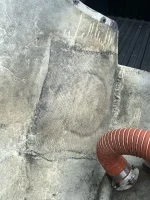
I can only assume that whoever rebuilt my airplane in the 90’s wanted the modern look of the new cowling, so that’s what he installed, but left the dual muffler exhaust. I am beginning to wonder if the lack of a negative pressure lip in combination with the old dual mufflers exhaust is inhibiting proper airflow through the cowling? I decided to investigate today. I removed the cowling and sure enough, there is a fiberglass “patch” where the single muffler exhaust stack SHOULD exit. Proof positive that my cowling was modified to accommodate the old exhaust. So now I am left to wonder, if I had single muffler exhaust and a more clear path for the hot air to exit the cowl, would I have lower CHT’s and more efficient airflow through my oil cooler? Or to go the other way, if I had the old style cowling with the old boot cowl, would it run cooler then? I do plan to swap to the single exhaust at this coming annual, so that will be a worthy experiment.

Here are some pictures:

1965-1973 cowl:


My Cowl:
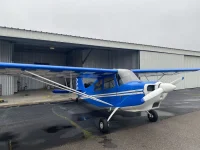
42B5F9C0-92FA-4967-B738-A2F63142F292.jpeg
1680721629529.webp42B5F9C0-92FA-4967-B738-A2F63142F292.webpC090A24D-342C-4E9F-9614-BDA146E9F1AC.webp1680721629529.webp
Fiberglass “plug” where exhaust stack should exit:
C090A24D-342C-4E9F-9614-BDA146E9F1AC.jpeg

That sure was a curve ball I didn’t expect. Am I crazy or does it seem plausible that this cowling/exhaust combination is inhibiting airflow somehow just enough to cause my higher than normal temperatures?
 
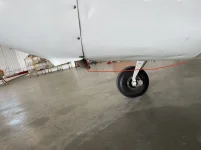
Does yours have a little drop down piece added like in the red I drew in? Could you grab a photo of about the same angle next time your out there? That cowl should just have an clear opening straight aft in the slip stream of an inch or two. Don’t currently have a Chinese blueprint sitting around here for a photo. Just looks like there’s a little piece almost the same level of the lower cowl.43E1C594-4312-4612-9BD5-35FE140D218A.webp
 

Attachments

  • image.webp
    image.webp
    95.9 KB · Views: 2
Does yours have a little drop down piece added like in the red I drew in? Could you grab a photo of about the same angle next time your out there? That cowl should just have an clear opening straight aft in the slip stream of an inch or two. Don’t currently have a Chinese blueprint sitting around here for a photo. Just looks like there’s a little piece almost the same level of the lower cowl.View attachment 5438
Yes it does. I might swing by the hangar this evening, I’ll take a pic if I do.
 
Back
Top