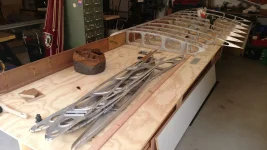
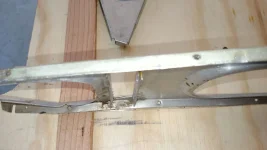
'68 Citabria 7ECA Milman Spar Conversion

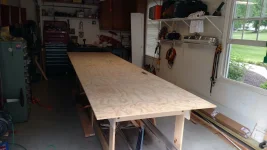
Just got done relocating the finished right wing back to the hangar and brought home the left wing. Will be starting on it later tonight and I'll try to photo-document the whole conversion process.

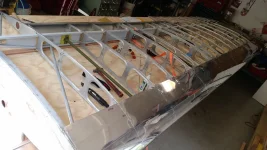
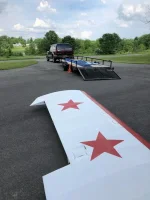
One down
IMG_20180602_113915501.webpIMG_20180602_155710694.webp


One to go
IMG_20180602_163216676.webpIMG954616.webp
 
It looks awesome! I like the grey spars... green makes mine look old haha

The leading edges look like they went on great. Did you use the vaseline?
 
No vaseline but I did get the hang of massaging the leading edges into place once the straps were on. I'm pretty happy with that first wing, I definitely learned a lot so the second one will go much faster and with less assembly/disassemnbly/reassembly/redisassembly/rereassemnbly/etc. slowing things down. :)
 
I had the good fortune of being referred to your forum. It looks very interesting and informative. I am rebuilding a 1959 7ec Champ and have just ordered a set of Milman spars. I noticed you had primed yours before installation. Did you do anything to the aluminum (like alumiprep) before applying the primer?
 
Hi @Guy and welcome to ChampCitabriaDecathlonForums.com!

As I understand it there are a lot of aluminum spar/wing airplanes out there that don't have any of the interior parts primed. So while I strongly considered installing my spars bare I ended up priming them just to maybe make the future sale of the plane easier. I figure someone might look through an inspection hole, see the primer and think I must have done a good job! If the plane will be hangared and kept in a relatively safe climate I don't see the primer doing much for the overall health of the wing. But I did it anyway.

Using the Stewart System the spars were first washed with a degreaser (EkoClean) and rinsed with distilled water. Then came the etching step using EkoEtch which was followed by Stewart's single part primer, EkoPrime. The EkoPrime should be sprayed on but an alternate method is a foam brush which is what I used. After it dried I had to run a reamer through the holes in the spars. Overall I'd say they turned out great, they could have been better but I'm very happy with them and how the first wing went together.

Welcome!
Bart
 
Last edited:
@Guy No real need for it but I agree with @Bartman that it looks so much better painted and is better in the long run. My only suggestion is that there is no need to put a lot on. I used a 2 part epoxy primer and put one coat on, just enough to not see the aluminum.
 
Thank you both for your insights. Very much appreciated.

My, our pleasure @Guy. I'm just back home after a first week of training for work so I'll be getting next to nothing done through the middle of July. When I'm back home though, hang out because this is getting old not having a plane to fly! And I want to get that "Went Flying Today" thread going with photos every day so I'll have to do it myself! lol
 
Could it be? Did I actually get something done today? Is there really more to come?

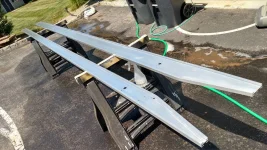
Home from training for a few days with a bum foot so decided to gimp around and get the spars washed and etched. Heading outside now to prime them. Once that's done we're off and running (figuratively speaking) again!

I should point out that I started with dry spars and used the hose to rinse after each step but then also rinsed after the hose water with distilled water from gallon containers. I don't know if it was necessary to double rinse the spars but the Stewart System documentation says to rinse with distilled water so that's what I did. For all four spars I probably went through twelve gallons of distilled water.

Left spars pre primer.webp
 
Last edited:
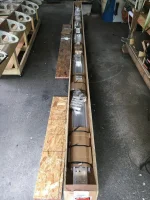
Glad to see you're back at it Bart. photo spars.webp It was Christmas in July for us when we got our spars from Milman's last Monday. Nothing out of the box yet other than the instruction sheets and the drilling jig. Looking forward to some learning in the days to come. It's very View attachment 917comforting to be able to look through you photo collection. Thanks.
 
Not that I will ever need them, but why has Milman not tackled the Decathlon? Others are faced with a $200 AD every single year. It takes me three hours to do the spar inspection - maybe four, since I do it over several days.
 
Not that I will ever need them, but why has Milman not tackled the Decathlon? Others are faced with a $200 AD every single year. It takes me three hours to do the spar inspection - maybe four, since I do it over several days.

My guess Bob would be that the market for Decathlon spars isn't as big as Citabria spars so the investment for the STC wouldn't be worth it. I agree it would be a nice option to have though.
 
Glad to see you're back at it Bart. View attachment 919 It was Christmas in July for us when we got our spars from Milman's last Monday. Nothing out of the box yet other than the instruction sheets and the drilling jig. Looking forward to some learning in the days to come. It's very View attachment 917comforting to be able to look through you photo collection. Thanks.

the drilling jig fits into the spar slot easily enough but you'd expect it to go the opposite of how it goes based on the drawing. there are a few details in the drawings that aren't exactly right but i understand it's difficult to make changes to stc paperwork so the details remain a little dodgy. i'll be drilling rib flanges tomorrow so I'll try to get a few good photos. it isn't hard, just time consuming if you're taking it on for the first time.

good luck with your project, i'll try to help however i can and there are a few other people with Milman experience that can help.
 
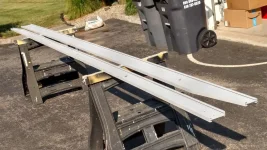
For those that aren't familiar with bare aluminum, once the spars are etched (cleaned with a mild acid to remove the thin surface layer of aluminum oxide) you really don't have a choice, the primer has to go on before the surface of the aluminum can begin to cover over with aluminum oxidize again. The aluminum really wants to react with the oxygen in the air so the spars have to be dried and primed as soon as possible although the Stewart guidance says prime within twelve hours. I don't know if anyone would actually wait that long and risk having the primer not bond well with the spars.

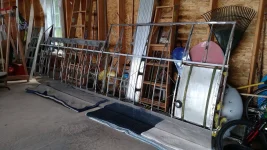
So, with the fear of oxidation in my mind, I passed on my afternoon nap and went to work. Here's the result, nicely primed spars that are ready to be installed and flown.
Primed 7ECA spars.webp

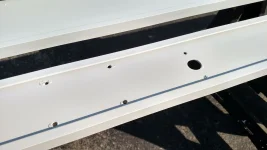
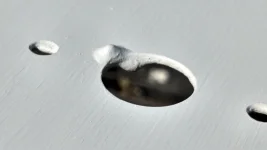
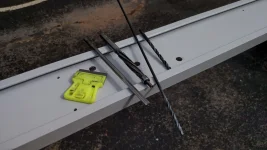
I used foam brushes to apply the primer. The downside is the finish is not smooth and professional looking and you're left with imperfections that have to be sanded or sliced off. I used a paint scraper with a fresh razor blade to carve the nubbies off of the finish. The upside is I didn't have to rig for spraying to get them done and I know for sure I got good coverage in between where the spar flange and spar web overlap. It's like a cove at the top and bottom, you can see the cross section of the spars in the photo above, the foam brush went right in there and left primer everywhere. I used a combination of drill bits and reamers to clean out the holes but whatever you do, don't turn the bits anymore than you have to to remove the primer so the holes won't be enlarged. If you can leave a scratch coat of primer behind you've mastered the technique!

nubbies in primer 2.webpnubbies in primer.webpprimer clean up tools.webp
 
For those that aren't familiar with bare aluminum, once the spars are etched (cleaned with a mild acid to remove the thin surface layer of aluminum oxide) you really don't have a choice, the primer has to go on before the surface of the aluminum can begin to cover over with aluminum oxidize again. The aluminum really wants to react with the oxygen in the air so the spars have to be dried and primed as soon as possible although the Stewart guidance says prime within twelve hours. I don't know if anyone would actually wait that long and risk having the primer not bond well with the spars.

So, with the fear of oxidation in my mind, I passed on my afternoon nap and went to work. Here's the result, nicely primed spars that are ready to be installed and flown.
View attachment 922

I used foam brushes to apply the primer. The downside is the finish is not smooth and professional looking and you're left with imperfections that have to be sanded or sliced off. I used a paint scraper with a fresh razor blade to carve the nubbies off of the finish. The upside is I didn't have to rig for spraying to get them done and I know for sure I got good coverage in between where the spar flange and spar web overlap. It's like a cove at the top and bottom, you can see the cross section of the spars in the photo above, the foam brush went right in there and left primer everywhere. I used a combination of drill bits and reamers to clean out the holes but whatever you do, don't turn the bits anymore than you have to to remove the primer so the holes won't be enlarged. If you can leave a scratch coat of primer behind you've mastered the technique!

View attachment 923View attachment 924View attachment 925

Painting the spars is a PERFECT way to learn how to paint if you’re new to it! Adjusting the paint gun to a skinny fan gets the cracks perfect and then a nice fan for the flat parts. Let’s you learn the adjustments on your gun on something that will be hidden in the end. Just a thought for anyone else.
 
I don't remember worrying about corrosion, but my 1966 mechanic said to mist all the wing parts with zinc chromate. At that point all aluminum parts had been bare for 20 years. They now are 72 years old, and not a speck of corrosion. All I did was mist - no etching, no nothing.

If you plan on outside tie down in coastal Florida, maybe you should worry more than I have.
 
Painting the spars is a PERFECT way to learn how to paint if you’re new to it! Adjusting the paint gun to a skinny fan gets the cracks perfect and then a nice fan for the flat parts. Let’s you learn the adjustments on your gun on something that will be hidden in the end. Just a thought for anyone else.

I agree with you completely Cliff, if I had the time and space I probably would have given it a try but since I'm far behind schedule, it was a lot faster to just brush it on with the foam brushes.
 
I don't remember worrying about corrosion, but my 1966 mechanic said to mist all the wing parts with zinc chromate. At that point all aluminum parts had been bare for 20 years. They now are 72 years old, and not a speck of corrosion. All I did was mist - no etching, no nothing.

If you plan on outside tie down in coastal Florida, maybe you should worry more than I have.

Agree with you too Bob, where we are in NJ and the fact that plane will likely always be hangared, corrosion proofing is overkill but I figured it would be a nice touch if/when the airplane ever goes up for sale so I tried to do it right.

I should point out it was much warmer when I did the second set of spars and so you can see brush strokes in the primer since it didn't have time to flow out at all. The first set was done in my basement over the winter and the finish was much better.
 
Last edited:
Moving right along, the instructions from Milman say to remove the ribs outboard of the strut attach points. My wings had ring shank nails (there's a photo in a previous post somewhere) and getting them out was nearly impossible until I tried heating up the heads with a giant soldering iron. About 25 seconds of heat on each nail head made them come out very easily leaving the rib flanges in great shape.

Who doesn't love pictures of tools!?!
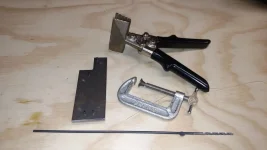
IMG_20180715_123656199.jpg

About 25 seconds of heat on each nail head made them come out very easily leaving the rib flanges in great shape.
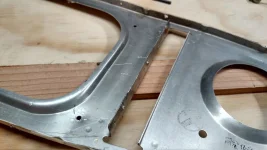
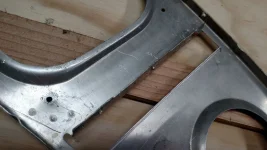
rib flange before 2.jpgrib flange before.jpg

To true up the flanges and get the nail holes flat again I used a 3" hand reamer. I got mine from a local window/siding supplier back when I was doing home remodeling jobs but there are aircraft grade seamers too
Here's mine
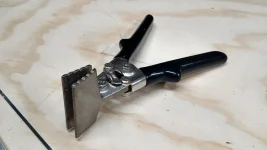
seamer tool.jpg
Here's a demo with aircraft seamers

Flanges after being pressed/smashed into submission
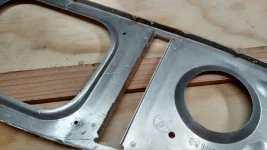
rib flange after 2.jpgrib flange after 3.jpg

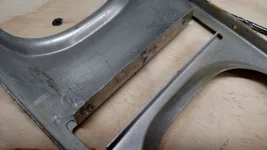
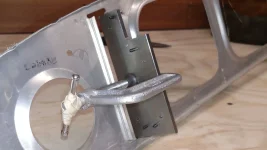
After the flanges are cleaned up and made nice you can start drilling the new holes where the ribs will be through-bolted to the spars. Milman provides a steel drilling jig which is clamped to the rib flange for perfect alignment.
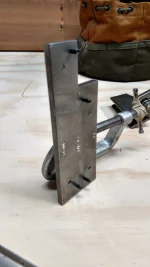
IMG_20180715_121310042_HDR.jpgIMG_20180715_121500446.jpg

When clamping it into place you have to
1. make sure the jig is tight to the bottom of the spar opening
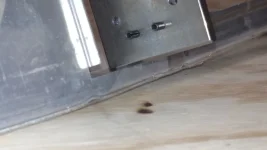
IMG_20180715_121516467.jpg
2. make sure the two pins are tight to the exposed edge of the rib flange
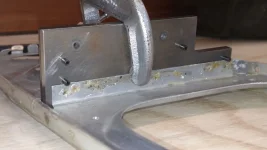
IMG_20180715_121627928.jpg
3. make sure you don't have it in the spar opening upside down since some ribs are on the spar with the flanges facing outward and some face inward.
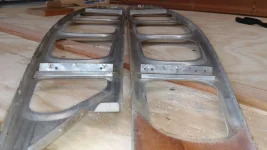
IMG_20180715_123613877.jpg

In that last photo you can also see what the new holes look like compared to the old nail holes.

The tool doesn't stick out very far when it's in the spar openings so it takes a few tries to get it just right then after that it's easy
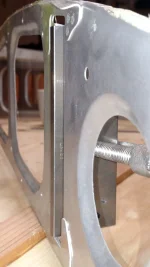
IMG_20180715_121734026.jpg

I've drilled the ribs that were removed from the spars to get the read wood spar out. Now the rest of the ribs' rear flanges can be drilled and then the left wing will be ready to have the new spar slid into place!
 
Last edited:
Done drilling new holes in the rear spar opening flanges so we're ready to slide the new spar into place.

IMG_20180716_113714314.webp

The flanges are only slightly bent out of the way for the spar to slide by.

1531755678834868465307.webp
 
Back
Top