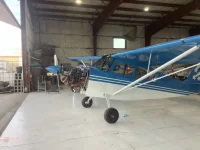
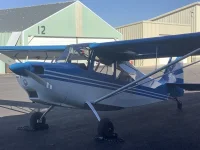
New project N163Y 7GCBC 1978

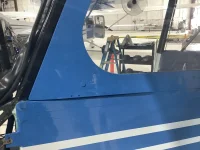
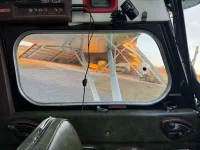
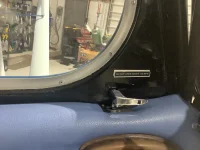
I’m replacing all the wing root fairings as well as replaced the inner rib on the left wing, this being said the new fairings are considerably wider, the wings were changed out with the new 7-71545 wings so they do screw in place and still have the tension screw. This was done in 2019. So I’m going to use both thought I would install without the rubber drill the screw holes the add the rubber for a better tighter fit. Something of interest with the new wings is I picked up 150 lb of us full load. I was reading the type certificate and see there is a reference to max weight of 1650 note 13 by which it ups this to 1800 if aircraft was retrofitted with wings 7-1545. Unless you have a O-235 motor What’s interesting is this was missed on the last weight and balance figures.
 
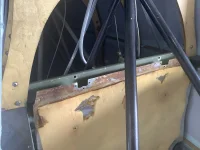
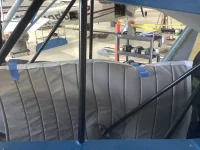
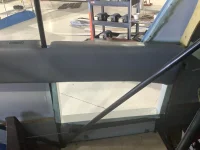
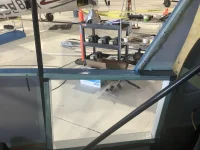
Fun fitting these new wing root parts. The new lowers are 1 peace and not pre bent, then the upper is almost 2 inches wider. Just a little more slowdown.
 

Attachments

  • IMG_2597.webp
    IMG_2597.webp
    1 MB · Views: 12
  • IMG_2595.webp
    IMG_2595.webp
    1.1 MB · Views: 9
  • IMG_2597.webp
    IMG_2597.webp
    1 MB · Views: 11
Question for anyone still looking, as I prepare to put the N numbers on this bird. According to far 45.22 b it appears I should be allowed to use 2” numbers due to the age of the aircraft so I’m looking for any comments or different interpretations.
 
(1) Fixed-wing aircraft, must be at least 12 inches high, except that:


(i) An aircraft displaying marks at least 2 inches high before November 1, 1981 and an aircraft manufactured after November 2, 1981, but before January 1, 1983, may display those marks until the aircraft is repainted or the marks are repainted, restored, or changed;

Maybe deny repainting and restoring, but rather just maintenance and rejuvenating?
 
Was this under far 45 would you reference the number you found this statement please. I see the reference to i. Seems really fuzzy to understand.
 
I found the reference to the 12 inch tall under 45.29 but when you look at 45.22 i. It listed as EXHIBITION, ANTIQUE, AND OTHER AIRCRAFT SPECIAL RUELS. Under this heading it list aircraft over 30 years old. Hence the interpretation might rely on the FAA representative, or the IA inspecting the repairs. Not sure I can call this antique on age or significant historical value. But then you have the other aircraft as special rules. Still open to comments.
 
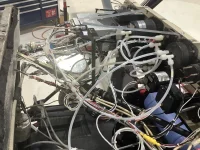
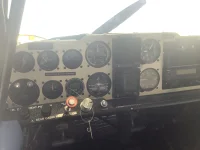
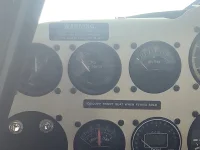
Wiring question we can’t find this in shop Manuel, the oil pressure gauge has a send, ground, ignition. The send will go to sending unit, dose the ground go to the other side of sending unit or do each need aircraft ground?
 

Attachments

  • IMG_2607.webp
    IMG_2607.webp
    1.7 MB · Views: 5
  • IMG_2606.webp
    IMG_2606.webp
    1.3 MB · Views: 4
  • IMG_2605.webp
    IMG_2605.webp
    1.4 MB · Views: 5
It is older than 30 years. No problem.
Just no out of country flights.
Thanks both my IA and I think this is correct. Now back to sorting wires we removed 2 years ago. Interior should be here next week, working on getting ready to pre-oil the engine. Hope to be flying the second week of July, not enough time to break it in for Oshkosh.
 
Bruce,
On the subject of grounding while rebuilding a light aircraft. Nagging electrical issues in light aircraft are a constant issue and frequently it is because of poor grounding. Knowing this and reading on the subject I decided to run separate grounds for about every electrical component in the aircraft. While this did give me a weight penalty I made up for it in other areas and it made trouble shooting electrical issues going forward much simpler. This process was accomplished simply by installing a grounding block on the back side of the firewall connected to the battery ground and is even more convenient if the battery is located on the firewall.
Cheers, Brian
 
Was this under far 45 would you reference the number you found this statement please. I see the reference to i. Seems really fuzzy to understand.
Sure Bruce, found it under 45.29 (b)(1)(i)
For me I find it best to read FARs really slowly, one word at a time.
 
Agreed on grounding issues, grounding block is installed, as for fars double wording and misdirection are standard and come down to who is making the decisions that day I think.

Thanks for all the input and help!
 
Yes, but you may not be allowed across the border. Double check the US reg.

There is something in section c that may cause problems if anybody really wanted to hassle you. It requires the foreign country to specifically authorize the operation. Let me see if I can copy it here:

(c) No person may operate an aircraft under paragraph (a) or (b) of this section—
(1) In an ADIZ or DEWIZ described in Part 99 of this chapter unless it temporarily bears marks in accordance with §§ 45.21 and 45.23 through 45.33;
(2) In a foreign country unless that country consents to that operation; or


(my emphasis)
 
Last edited:
As an aside, I have a friend who winters in Tx and summers at his Ak home. He flys a 170 and stays offshore avoiding Canada all together.
 
That is a gutsy route. I get uneasy when I fly over swamps in the southeast, even along those roads built on stilts.
 
Years ago when I first started flying I told a friend I was going to fly out of Anchorage and head for Cordova across Prince William Sound, I was a bit concerned going 100 plus miles over mostly water so I was going to wear a life vest. He said oh that's good then they will be able to find your body!! Half way across you hear every noise the engine makes.
 
Back
Top