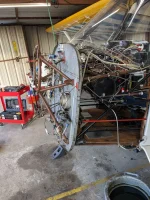
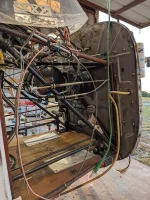
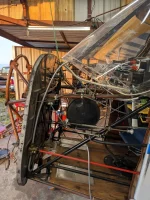
8KCAB While the engine is off ...

Weak cam and lifters probably are the reason for Lycoming changing most of their engines to roller lifters.
 
I'm almost embarrassed to share this simple idea but after an O-320 overhaul due to cam/lifter spalling, I noodled out a way to "Pre-Oil" the cam before starting the engine if it's been sitting for more than a week.

I attached a 18" piece of 1/4 ID plastic tubing to an air blow gun. The idea is to insert the tube down the oil filler tube into the sump, hit the air, and splash lots of oil around in there. It's highly advisable to hold a rag securely around the top of the filler tube or it will blow spray out in your face.

Undoubtedly someone thought of this years ago but I'm not aware of it. At the worst case, it doesn't seem to hurt anything.
 
I'm almost embarrassed to share this simple idea but after an O-320 overhaul due to cam/lifter spalling, I noodled out a way to "Pre-Oil" the cam before starting the engine if it's been sitting for more than a week.

I attached a 18" piece of 1/4 ID plastic tubing to an air blow gun. The idea is to insert the tube down the oil filler tube into the sump, hit the air, and splash lots of oil around in there. It's highly advisable to hold a rag securely around the top of the filler tube or it will blow spray out in your face.

Undoubtedly someone thought of this years ago but I'm not aware of it. At the worst case, it doesn't seem to hurt anything.

:unsure: and that works?
 
I'm confident that it does oil the cam prior to starting. Whether it is really necessary is debatable. After spending $26K on the overhaul, I'm willing to try anything that MIGHT help.
 
I'm almost embarrassed to share this simple idea but after an O-320 overhaul due to cam/lifter spalling, I noodled out a way to "Pre-Oil" the cam before starting the engine if it's been sitting for more than a week.

I attached a 18" piece of 1/4 ID plastic tubing to an air blow gun. The idea is to insert the tube down the oil filler tube into the sump, hit the air, and splash lots of oil around in there. It's highly advisable to hold a rag securely around the top of the filler tube or it will blow spray out in your face.

Undoubtedly someone thought of this years ago but I'm not aware of it. At the worst case, it doesn't seem to hurt anything.

I'll ask the engine guys when I visit to take a look at my engine after they open it up. They should have some insight on whether that would have an effect. IMO the primary solution is to run the engine weekly to keep it lubed, and run it long enough to get engine temps high enough to burn off moisture and contaminants.
 
Thanks Ed. Looking forward to the feedback. I'll ask a couple of the Mechanics around KRYN about it and report results.

I agree about running the engine weekly but it's a 2 hour round trip drive to the airport so I don't get out there every week but I wish I could. At least we've got a warm, dry climate.
 
Well heck, in AZ you could probably go a much longer time between runs. In FL, if I left it alone 30 days I would probably have tropical plants growing out of the exhaust.
 
I'll ask the engine guys when I visit to take a look at my engine after they open it up. They should have some insight on whether that would have an effect. IMO the primary solution is to run the engine weekly to keep it lubed, and run it long enough to get engine temps high enough to burn off moisture and contaminants.
Running the engine with out flying is worse that not running it. See the video; (1) Engine Corrosion Tips From RAM Aircraft - YouTube
This may be more effective; Engine Saver | Aircraft Spruce
 
This idea about lubing the cam may be a fool's errand and I'm the fool.

I talked with a Mechanic today. He said that it sounded like a great idea but, from his memory, unlike automotive engines, Lycoming oil sumps were mostly isolated from the crankcase except for some oil drainage slots. He thinks it's unlikely that any oil spray from the sump would make it up into the crankcase.

He is scheduled to do a top overhaul on an O-235 in the near future and he will check it out and report back to me.

Sorry about wasting your time...
 
Was Camguard used prior to the sit? Camguard (not W100 Plus) can help with that. That's the only reason I'm halfway optimistic about my engine. It sat almost 3 years only being flown 3 or 4 times, but ground run monthly. Previous owner, while unable to fly (lost medical) was religious about Camguard. Financially, I'm planning to be in the same boat as you, but I'm sure gonna be happy if it continues to run well with no metal.
 
According to Pilots of America, I am going to die a flaming death if I do not have my engine mount overhauled at a specialty shop. There is only one, and amazingly every mount sent to them needs repairs. Anyone else have experience with this? There are thousands of homebuilts out there with engine mounts fabricated in garages, and I am not aware of an epidemic of engines falling from the sky. Seems like a competent A&P ought to be able to media blast, inspect, and paint a mount.
 
More and more I am seeing that. A catastrophic mount failure would be a death sentence, followed immediately by ADs out the Gazoo. How many of those have you heard of?

The only serious engine mount problem I am aware of occurs right after one blade of the propeller leaves the scene. That will upset a brand new certified mount in about a half second. Even that is rare, but there is a giant cable in my engine compartment that might keep the engine close enough to the airframe to enable a quick landing.

Pilots of America is full of folks like me - opinions. Take all of us with a grain of salt.
 
Cub guys are like that - if you don't get your carb overhauled by an expert once every five years, you shall die a flaming ember. A Cub carb is simpler than the old Stromberg 97.

This week we are worrying abou nuts cracking and falling off exhaust system clamps - current cure is silver plated nuts.

Nuts!
 
Awe man it's project time now Ed! Once that boot cowl comes off you can do so much! My engine ate a piston plug and a half from one of the cylinders. It was overhauled in the mid 90's when Lycoming had a real problem with that. Once we opened it up though, we saw the corrosion from it sitting for 4 years at one point about 10 years ago. One set of tappets and a cam lobe were totally pitted and worn. The crank also had some serious corrosion and the rods as well. Funny thing...engine was still running like a champ. Only had 465hrs on it since OH. But it was OH 26 years ago. Oh well, it's new a running great now.

Check all that old wiring thoroughly while you can get at it. I found a few wires that needed to be replaced and a few shoddy splice jobs from the past.
 
Waffling a bit on my resolve. By the time I pull the engine, mount, boot cowl, windshield, and interior out/off, I am awfully close to being able to cut the fabric off and recover.

What is involved in removing and replacing the wings and tail surfaces? Looks pretty simple, as long as I have help. Maybe a day of work each way?

I once thought I would need to completely disassemble everything to the bare frame, blast, and repaint. But after looking at it, I think I could accomplish the purpose by leaving the wiring and plumbing installed and inspecting/spot blasting the frame where necessary.
 
Wings are indeed easy. Get some big nails (20D?) take out all bolts and replace with nails. Disconnect fuel, control cables, and wiring. Have somebody else double-check that everything is disconnected and out of the way. Have pads ready.

Then get four friends, brief them on how fragile the trailing edge is, pull the nails holding the struts while two buddies hold the tip, get them out of the way, then, with diagonal cutters in your pocket just in case, pull the last two nails and set the wing on the pads.

Never make your buddies hold things while you drive bolts in and out.

And don't needlessly bead blast.

Opinion.
 
How about the tail feathers? If I pull them off and don't change anything, is assembly just the reverse? Or is there balancing and rigging involved?
 
Time to pull wings and tail feathers is les than half a day, but I suggest doing it slower my helper put all the nuts,bolts,clamps, screws in a pan. Make your life simpler tag and bag every part as you remove them I would also suggest a note book for parts you want to replace with new, like wing bolts pulleys and so on. Then wile the skin is off check all the cables with soft rag for snags also run the rag over any welds that may touch the fabric wile your sanding down any paint layers. But I’m sure you have thought all this through. Last item I prefer through inspection of frame and welds before any blasting any paint off. Last item anything you need to order will more than likely be on back order. Good luck and post lots of pictures as you go 👍
 
Back
Top